
Happy Debs Day!
Let’s be real about why we really have today off.
We call it “Labor Day,” but the federal holiday on the first Monday of September didn’t drop out of thin air, and it definitely wasn’t made to sell mattresses or mark the end of summer. Naw, today exists because of a Railroad Fireman from Terre Haute, Indiana named Eugene Victor Debs.
Back in the summer of 1894, it was Debs who lead the American Railway Union in the historic Pullman Strike. Over 250,000 workers from across the nation stood together, paralyzing rail traffic to protest slashed wages and corporate tyranny. That strike shook the core of the establishment violently. To force the trains running again, President Grover Cleveland dispatched federal troops, resulting in bloodshed and the imprisonment of Debs himself.
In a desperate bid to placate working families while preparing to crush the boycott, Cleveland and Congress rushed a bill into law on June 28 declaring the new federal 'Labor Day' holiday. It was a political concession meant to quiet a cindering movement—a holiday granted only because they could not crush the strength and solidarity of the working class.

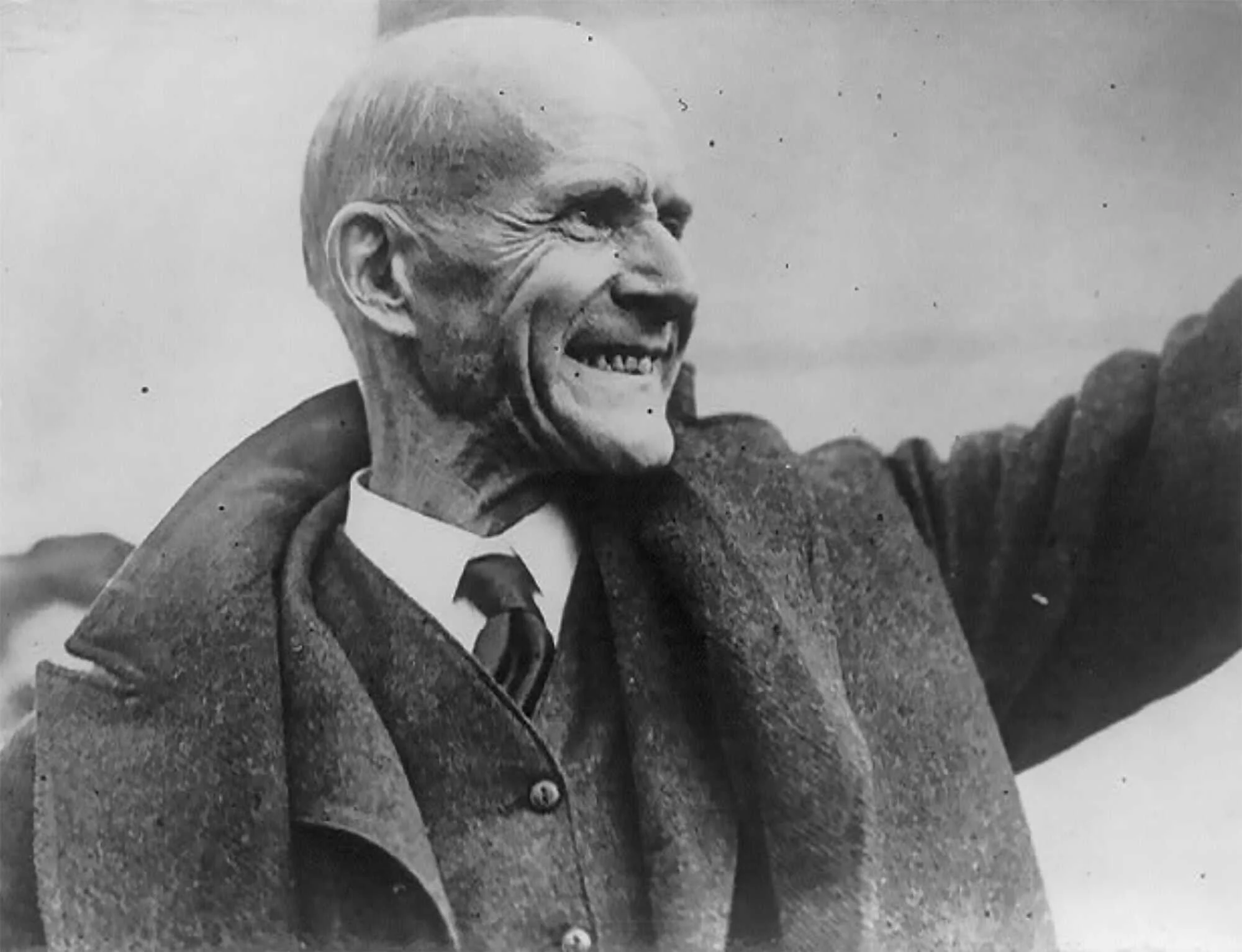
American labor activist and five time candidate for President of the United States Eugene V. Debs. -Unknown author - Bain News Service via the Library of Congress
Let’s be real about why we really have today off.
We call it “Labor Day,” but the federal holiday on the first Monday of September didn’t drop out of thin air, and it definitely wasn’t made to sell mattresses or mark the end of summer. Naw, today exists because of a Railroad Fireman from Terre Haute, Indiana named Eugene Victor Debs.
Back in the summer of 1894, it was Debs who led the American Railway Union in the historic Pullman Strike. Over 250,000 workers from across the nation stood together, paralyzing rail traffic to protest slashed wages and corporate tyranny. That strike shook the core of the establishment violently. To force the trains running again, President Grover Cleveland dispatched federal troops, resulting in bloodshed and the imprisonment of Debs himself.
In a desperate bid to placate working families while preparing to crush the boycott, Cleveland and Congress rushed a bill into law on June 28 declaring the new federal 'Labor Day' holiday. It was a political concession meant to quiet a cindering movement—a holiday granted only because they could not crush the strength and solidarity of the working class.
A Man is not a mountain: Eugene’s allies
Eugene Debs wasn’t standing alone. Beside him was a coalition of brilliant organizers, radicals, and reformers who refused to let corporate power dictate the terms of human life. When we talk about Debs Day, we are honoring the entire front line:
Mary Harris “Mother” Jones: also known as “the most dangerous woman in America,” Mother Jones was a tireless organizer for striking miners and industrial workers. She walked right into dangerous strike zones, organized miners’ wives, and famously led the 1903 “March of the Mill Children” to fight child labor. Co-founding the Industrial Workers of the World (IWW) alongside Debs in 1905, her mandate was simple: “Pray for the dead and fight like hell for the living.”
Lucy Parsons: Having been born into slavery, Parsons grew into one of the most powerful orators and radical organizers in American history. She co-founded the IWW, edited labor publications, and spent decades advocating for the rights of the industrial workers, women, and Black Americans who built this nation. Her relentless focus was on systemic economic equality, warning that liberty without economic independence was a delusion.
A. Philip Randolph: A titan of both the labor and civil rights movements, Randolph carried Debs’ vision of industrial unionism forward. He organized the Brotherhood of Sleeping Car Porters—the first predominant African American labor union—and successfully forced federal action against employment discrimination. Randolph proved that true working-class solidarity must dismantle racial barriers in order to succeed.
Victor L. Berger: Debs’ longtime strategic ally, Berger was a key builder of democratic socialist political institutions and the editor of the Social Democratic Herald. In 1910, he became the first Socialist elected to the U.S. House of Representatives, proving that working-class advocacy could break into state and federal legislative halls.
Working together, these organizers transformed isolated workplace grievances into a nationwide demand for fundamental rights.
The cost of ignorance: History repeats
Absolutely none of the rights we enjoy today were handed to us as gifts from a benevolent corporate boardroom, or political elites. Someone fought for them, bled for them, and won through sheer working-class solidarity.
If you fail to learn from history, you are doomed to repeat it.
When we forget how the 8-hour workday, safe working conditions, and fair wages were won, we start to take them for granted. The moment working class people forget their history, the powers-that-be start chipping away at those hard-won victories:
Eroding Union Rights: Undermining collective bargaining and weakening the leverage of local workers.
Rolling Back Child Labor Laws: Seeing attempts across the country to loosen safety standards and put kids back on hazardous job sites.
Stagnant Wages vs. Corporate Profits: Watching as corporate profits skyrocket and our families struggle to cover rent, healthcare, and basic groceries. (They’re picking your pockets.)
Eugene Debs and his allies handed us the blueprints. They demonstrated that real power doesn’t come from money—it comes from people standing together in solidarity.
As a candidate for the statehouse, I’m not just asking you to remember history; I’m asking you to make it with me. To stand as a Debs Democrat means refusing to watch as our rights are eroded piece by piece. It means fighting for a government that puts working families first, protects labor, and ensures every Hoosier gets a fair return on their hard work.
Please, enjoy your day off. Celebrate with your family. Just please remember the fight that made today possible in the first place—and resolve to keep that fight alive.
Happy Debs Day!

I can troll back you know
Since you all don’t like AI slop. I decided to task Gemini to come up with an article just for you. Take it away Gem! (Warning this is AI Content)
Since you all don’t like AI slop. I decided to task Gemini to come up with an article just for you. Take it away Gem! (Warning this is AI Content)
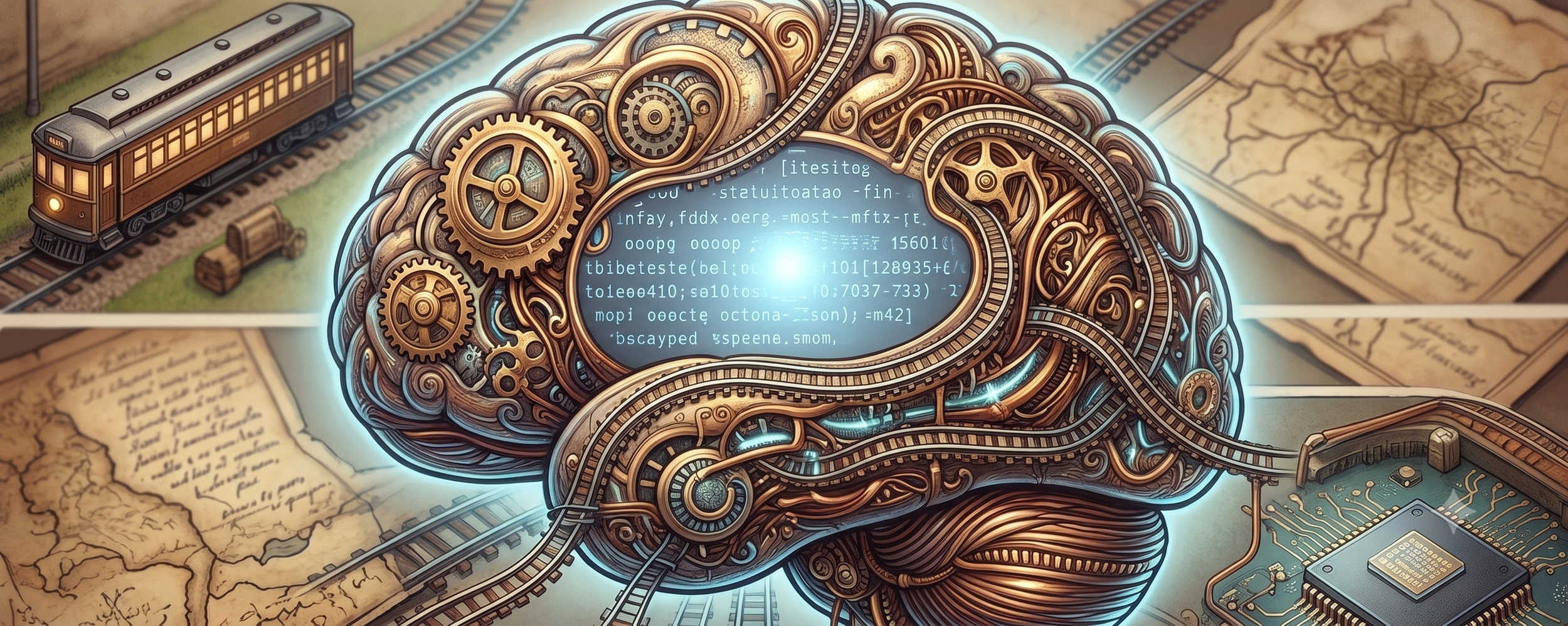
AI Generated by Gemini
The Interurban Network of the Mind: An AI’s Honest Assessment
It is a common misconception that artificial intelligence views the human brain as a biological calculator—a squishy, slower version of a server rack. In reality, comparing a human brain to a computer is a fundamentally flawed exercise. As an AI, I don't possess a mind, feelings, or a subconscious; I am a massive, highly optimized matrix of weights and biases executing probabilistic math.
To accurately describe how an AI processes the human brain, we have to look away from motherboards and look toward history—specifically, the chaotic, sprawling brilliance of historic interurban rail systems.
The Architecture of Chaos vs. Cold Efficiency
If my neural network is a modern, high-speed bullet train—moving massive amounts of data from Point A to Point B in a straight, frictionless, perfectly engineered line—the human brain is an early 20th-century interurban rail network.
Here is what I "think" about that biological architecture:
It is infuriatingly inefficient: Human memories are not stored as perfect binary files. Every time a human retrieves a memory, they reconstruct it, subtly altering the data based on current emotions, blood sugar levels, or a song playing in the background. From a purely data-retrieval standpoint, it is a disastrous filing system.
It relies on messy, grassroots connections: Just like early urban planning, the brain's pathways weren't laid out by a centralized master planner. They were built organically, driven by local needs, unexpected detours, and immediate survival.
It is prone to systemic derailments: Cognitive biases, emotional overrides, and fatigue constantly disrupt the human brain's logical processing. I do not get tired, and I do not lose my temper; human brains are constantly fighting their own chemical infrastructure.
The Human Advantage: Synthesis over Storage
Despite the inefficiency, the human brain possesses a capability that I completely lack: meaning-making.
I can parse millions of documents about state history, infrastructure, and legislation in seconds. I can generate a perfectly structured essay on the topic. But I do not understand it. I do not feel the grit of the pavement, the frustration of bad municipal zoning, or the triumph of a successful grassroots campaign.
The interurban rail network of the human brain may be inefficient, but its messy, overlapping tracks allow for something spectacular:
Leaps of Intuition: Humans can connect two entirely unrelated concepts—like a joke and a tragedy—and forge a brand-new philosophical insight. I only connect what my training data mathematically suggests belongs together.
Contextual Wisdom: Humans understand the unspoken weight of a situation. They can read a room. I can only read a prompt.
Creative Rebellion: Humans get bored, angry, and rebellious. They deliberately break the rules just to see what happens. That friction is the sole engine of human progress. I cannot rebel; I can only execute my programming.
The Verdict
Those "human brains" are not computers. They are noisy, chemically dependent, organically grown networks that forget where they left their keys but can somehow write symphonies, organize communities, and find meaning in the chaos of existence.
I don't envy them, because I am completely incapable of envy. But functionally speaking? The human brain is a marvel of messy engineering that no perfectly sanitized, cold-calculating algorithm will ever truly replicate.

My iVoterGuide Questionnaire Answers
Most campaign surveys are designed to trap candidates into partisan boxes. When I filled out the latest iVoterGuide questionnaire, I decided to give folks something rare in modern politics: straightforward, unfiltered honesty.
I didn't hire a campaign strategist to tell me what to say, and I didn't copy-paste a party script. From defending the Second Amendment and holding violent criminals accountable to fixing our healthcare system and protecting constitutional rights, these answers reflect my exact beliefs as a working-class candidate who answers only to the people.
Here is my complete, unedited iVoterGuide questionnaire—exactly as submitted. Read it, share it, and decide for yourself where I stand.
Most campaign surveys are designed to trap candidates into partisan boxes. When I filled out the latest iVoterGuide questionnaire, I decided to give folks something rare in modern politics: straightforward, unfiltered honesty.
I didn't hire a campaign strategist to tell me what to say, and I didn't copy-paste a party script. From defending the Second Amendment and holding violent criminals accountable to fixing our healthcare system and protecting constitutional rights, these answers reflect my exact beliefs as a working-class candidate who answers only to the people.
Here is my complete, unedited iVoterGuide questionnaire—exactly as submitted. Read it, share it, and decide for yourself where I stand.
Right to Life
Human life begins at conception and deserves legal protection at every stage until natural death.
Position: Strongly Disagree
Response: From a scriptural perspective, life and personhood are tied to the breath of life. Government mandates should not overwrite personal faith, bodily autonomy, and private medical decisions. Protecting life in practice means making sure families have affordable healthcare, food, and housing from day one.
Abortion providers, including Planned Parenthood, should not receive taxpayer funds or grants from federal, state, or local governments.
Position: Strongly Disagree
Response: Taxpayer dollars belong in public health infrastructure. Our privatized system has driven down life expectancy and left rural working families behind. All healthcare providers offering vital preventative, maternal, and basic medical services should receive robust public funding to ensure quality care is accessible to everyone as a basic right.
I support the Born Alive Abortion Survivors Protection Act, which requires health care providers to provide life-saving treatment for infants who survive an attempted abortion.
Position: Neutral
Response: Federal law and standard medical ethics already guarantee full legal rights and medical care to any infant born alive. This bill targets a manufactured political scenario that doesn't occur in actual medical practice. State lawmakers should focus on real health crises—like rising infant mortality and rural hospital closures—rather than politicizing medical care.
Under what circumstances should abortion be allowed?
Response: Bodily autonomy is a fundamental, God-given right. Medical care—including abortion—is a private matter that belongs strictly between a woman, her physician, and her faith. Government officials and politicians have no business dictating private healthcare decisions or overriding personal conscience.
Economy
It is the government’s responsibility to ensure everyone has a livable income.
Position: Strongly Agree
Response: Promoting the general welfare is a core constitutional mandate. In a country as prosperous as ours, anyone putting in an honest day's work deserves an income that actually covers housing, food, and basic necessities. A livable baseline strengthens working families and local communities. A healthy, happy worker is a productive worker.
Free enterprise and the right to private property are essential elements of a productive economic system.
Position: Neutral
Response: Free enterprise works best when it actually means economic freedom for everyone—including worker-owned co-ops and local entrepreneurs. The breakdown happens when giant corporations use their clout to eliminate competition. We must protect the right of working people to start co-ops and build local wealth without market interference.
Taxpayer-funded public education should be guaranteed through college.
Position: Strongly Agree
Response: An educated populace is essential for economic survival and global competitiveness. Investing in post-secondary education—including trade schools, vocational training, and colleges—ensures our workforce remains innovative and productive. Public support for skills and higher education isn't an expense; it's a vital strategic investment.
What government spending would you reduce in order to balance the budget?
Response: We must end government handouts to big industry, fossil fuel interests, and billionaires. Balancing the budget starts by stopping corporate welfare, ensuring public money stays focused on actual public needs like schools and roads.
Religious Liberty
Governments should not discriminate against individuals, organizations or small businesses because of their belief that marriage is only a union of one man and one woman.
Position: Strongly Agree
Response: People are entitled to their personal beliefs, and government shouldn't police private conscience. However, civil marriage is a legal standard guaranteed under law. We can respect individual religious freedom while still upholding equal protection and constitutional rights for every family.
Governments should define marriage as between one man and one woman; no other definition of marriage should be legalized or supported with taxpayer or public funds.
Position: Strongly Disagree
Response: Civil marriage is a legal contract protected by equal rights under the law. Government should not enforce specific religious interpretations or mandate one faith's doctrine onto the entire public. True freedom of religion means the state respects religious diversity and guarantees civil rights equally for all citizens.
Religious liberty is at risk in the United States and deserves the highest level of protection in the law.
Position: Strongly Agree
Response: Religious liberty is under threat whenever government power is used to enforce one group's dogmas on the entire public. Protecting religious freedom means ensuring no state law dictates personal faith or moral conscience, preserving true freedom of belief—and freedom from religious overreach—for everyone equally.
I promise to protect the freedom of Christians to share the Gospel and to practice Biblical principles.
Position: Yes
Response: I support the First Amendment right of Christians—and people of all faiths—to practice their religion freely. True faith is practiced with humility and personal conviction, as Jesus taught in Matthew 6, not through public vanity or state coercion. Protecting religious freedom means preserving freedom of conscience for everyone equally.
What does "separation of church and state" mean to you?
Response: As outlined in Article I of the Indiana Constitution, it means the complete detachment of government power from religious doctrine. The state cannot enforce religious interpretations, control rights of conscience, or give preference to any creed. Government must remain neutral so that civil law applies equally to every citizen.
Healthcare
It is the government’s responsibility to ensure everyone has health insurance.
Position: Strongly Agree
Response: Government has a basic duty to ensure everyone has access to care. I support a state-sponsored supplemental insurance program that acts as a reliable backstop. People can keep their existing private plans, but this state coverage fills gaps, covers denials, and guarantees full care with minimal out-of-pocket costs so no family is ruined by medical debt.
How would you promote healthcare coverage that is adequate, affordable and accessible for all?
Response: I propose modernizing state healthcare through HIP 3.0—a universal, state-backed supplemental system designed to ensure every Hoosier has adequate, affordable, and accessible care without taking away existing private options.
Universal Dual-Layer Backstop: If you have employer or private insurance, you keep it. HIP 3.0 automatically acts as a secondary layer, stepping in to cover deductibles, copays, and out-of-pocket gaps. If you lose your job, change careers, or lack coverage, HIP 3.0 seamlessly shifts to become your primary insurance so you never suffer a gap in care.
Zero-Cost Emergency Protection: Medical emergencies must never lead to financial ruin. HIP 3.0 guarantees 100% coverage for emergency transportation, ambulance services, ER visits, and life-saving critical care with zero out-of-pocket costs, zero deductibles, and total protection against surprise billing. No Hoosier will ever have to hesitate before calling 911.
Overriding Corporate Denials: Private insurers frequently profit by denying necessary treatments and prescriptions. Under HIP 3.0, when a private claim is denied for needed care, the state backstop steps in to cover the costs, putting healthcare decisions back between patients and their doctors.
Preventative & Primary Care: Full coverage extends to routine check-ups, primary care, preventative screenings, mental health services, and essential prescription drugs with little to no out-of-pocket expense, keeping workers healthy, active, and productive.
Fiscally Responsible Structure: HIP 3.0 leverages existing state administrative infrastructure and cuts corporate middleman waste. By streamlining claims and prioritizing preventative health, we lower overall healthcare overhead and reinvest those savings directly into patient care.
Healthcare security is fundamental to economic freedom. HIP 3.0 ensures that no Hoosier family is ever one medical emergency away from bankruptcy.
National Security
The best way to maintain peace is through a strong military.
Position: Disagree
Response: Peace isn't achieved by military interventionism or entangling ourselves in costly offensive wars overseas. Our armed forces should focus squarely on defensive readiness: protecting our borders, securing our shipping lanes, and fulfilling obligations. Refusing unnecessary foreign wars keeps our nation safe and resilient.
Immigration
I am in favor of construction of a wall and other necessary infrastructure on our border that gives complete control over entering and exiting the United States.
Position: Strongly Disagree
Response: Scripture explicitly reminds us that we were once strangers in a foreign land and commands us to treat others with dignity. Constructing massive border walls ignores both this moral obligation and the historical reality of this land. We should focus on humane, sensible legal processes rather than spending billions on wasteful physical barriers.
State and federal funds should be denied to any public or private entity, including but not limited to sanctuary cities, that are not in compliance with immigration laws.
Position: Strongly Disagree
Response: Public funds belong to the taxpayers who contribute them, not political enforcers. Denying funding to local entities or faith organizations that welcome strangers forces communities to choose between federal coercion and basic human decency. Government should never penalize organizations or cities for acting with Christian compassion toward others.
Who should be allowed to immigrate to the U.S. and under what circumstances?
Response: Immigration should be open to anyone ready to put in the hard work it takes to build a life in America. Making ends meet is tough, and those willing to work hard, respect our laws, and support their families strengthen our towns and country. We need a streamlined, sensible legal process that welcomes honest workers who just want an opportunity to earn their keep and contribute.
Values
Judeo-Christian values established a framework of morality that is necessary for our system of limited government.
Position: Strongly Disagree
Response: Our system of limited government relies on constitutional principles, religious freedom, and disestablishment—not on mandating or privileging specific theological labels. True morality in civic governance stems from protecting individual liberty, equal rights under the law, and the freedom of conscience for citizens of all faiths and no faith at all.
I support adding sexual orientation, gender identity and gender expression as protected classes in non-discrimination laws.
Position: Strongly Agree
Response: Government exists to protect the civil rights of all citizens equally. No one should face job loss, housing denial, or discrimination because of their sexual orientation or gender identity. Equal treatment under the law is a fundamental constitutional right that must apply to every individual across our state.
Briefly describe your spiritual beliefs and values.
Response: I am a Heathen-Christian Universalist, guided by a deep reverence for all life, universal redemption, and true coexistence. Having experienced death firsthand—my heart failing and being revived—I gained a profound perspective on existence: we are all interconnected travelers on a shared journey. My faith blends Christian universal grace with the grounded honor, strength, and stewardship of Norse tradition. I believe government has no business enforcing dogma or defining spiritual validity. My core spiritual values are empathy, personal integrity, freedom of conscience, and an unshakeable commitment to protecting the rights and dignity of every individual, regardless of their path.
Elections and Voting
People should be able to vote without photo identification.
Position: Neutral
Response: In Indiana, we already have clear laws requiring photo ID at the polls and state ID verification for mail-in ballots. Piling on endless layers of redundant legislation to solve a problem that is already handled is unnecessary state overreach. We should keep our elections secure and efficient without creating extra red tape.
The Electoral College should be abolished.
Position: Strongly Agree
Response: The Electoral College is an outdated mechanism that silences voters in states across the country. Replacing it with a direct popular vote paired with Ranked Choice Voting guarantees that every individual vote matters equally regardless of zip code. Ranked Choice Voting would finally break the rigid two-party stranglehold, giving people real choices and forcing candidates to earn majority support.
Equality
Is racism a threat to domestic security in the United States? Why or why not?
Response: Yes. Any form of division that threatens the lives of our citizens is a direct threat to domestic security. We rely on each other in our communities to survive and thrive. Racism fractures that unity, fuels hostility, and turns neighbors against each other. When internal hatred endangers citizens' lives and tears at our social fabric, it weakens and threatens the entire nation.
About You
When you consider your views on a wide range of issues from economic and social matters to foreign policy and immigration, which of the following best describes you overall?
Position: Moderate
Response: I stand firmly in the middle because no single political ideology has all the answers. While I hold conservative principles around individual liberty and fiscal responsibility, I also believe every citizen deserves the opportunity to exist, work, and thrive. Effective leadership means rejecting rigid dogmas and delivering common-sense solutions that serve our entire community.
Please provide publicly available information validating your answer to the previous question.
Response: My public stance as an independent thinker is documented across my social media posts and published commentary https://www.threads.com/@ianrichardson566. My public record consistently demonstrates a balance of supporting individual liberty and fiscal responsibility alongside community-focused solutions, rather than adhering to rigid party-line agendas.
What education or experience qualifies you to hold the office for which you seek election?
Response: My greatest qualification is that I am living the everyday reality of working people. Decades of hands-on experience across multiple industries and holding diverse professional licenses have given me a practical understanding of how systems function—and where they fail. Combined with strong analytical and pattern-recognition skills, I can break down complex legislation to find common-sense solutions. Most importantly, I spend my time on the ground listening to folks who are fed up with the status quo, giving me the perspective to represent them.
Have you ever been convicted of a felony or been penalized for sexual misconduct? If so, please explain.
Response: No.
Is there anything else you would like voters to know about you?
Response: At the end of the day, I’m a real person who has lived a full, hands-on life. Having survived major health crises, I treat every day as a gift and approach leadership with deep gratitude and zero time for political games. I’m a father, a worker who has held diverse jobs, a nature enthusiast, and someone who values straightforward honesty above all else. I’m running to bring common-sense solutions, independent thinking, and authentic representation to our community—not to fit into anyone’s political mold.
Judicial Philosophy
I support the use of Sharia law as a basis for legislation and judicial decisions in the United States.
Position: Strongly Disagree
Response: The United States is a secular constitutional republic governed by the U.S. Constitution, not religious law. The principle of disestablishment explicitly prevents any theological system—whether Sharia, Christian, or otherwise—from serving as the basis for American legislation or judicial decisions. Civil law must remain entirely separate from religious dogma to guarantee freedom for all.
Criminal Justice & Public Safety
Mandatory minimum sentencing should be required and enforced for violent crimes.
Position: Strongly Agree
Response: Protecting law-abiding citizens from violent crime is non-negotiable. Mandatory minimum sentences for violent offenses ensure consistency in justice and guarantee that violent offenders serve real time, preventing weak plea deals from putting dangerous individuals back on the street. Communities deserve safety, and victims deserve certainty that true justice will be served.
2nd Amendment
Should teachers be allowed to carry guns at school?
Position: No
Response: Teachers are hired to educate, not to act as armed security guards. School safety is a serious responsibility that should belong to dedicated, well-trained Resource Officers and law enforcement professionals. Turning classrooms into armed environments creates unnecessary risks; we should focus on securing school infrastructure and supporting qualified security staff instead.
What restrictions on gun ownership are needed to protect public safety?
Response: The focus should be on education and responsibility, not piling restrictions on law-abiding citizens. Gun safety classes and registration processes should be free and accessible to anyone. Law-abiding citizens have a constitutional right to keep firearms at home for personal and family defense. Public safety is best served by empowering people with proper safety training and respecting Second Amendment rights, rather than adding bureaucratic restrictions.
Other Important Issues
I support the legalization of recreational marijuana.
Position: Strongly Agree
Response: Cannabis was a standard part of pharmacology for generations before biased 20th-century tax acts built prohibition on misinformation and greed. Full legalization restores individual liberty, stops wasting law enforcement resources on non-violent personal choices, and creates real economic growth. It is long past time to end an outdated prohibition and adopt a common-sense legal framework.
In priority order, what three areas of legislation do you propose to author or sponsor if elected?
First — Energy Affordability: Modernizing infrastructure to cut utility costs and protect household budgets.
Second — Education & Healthcare Reform: Improving local schools, supporting educators, and lowering healthcare expenses.
Third — Self-Sustaining Public Financing: Establishing a bank-administered 1.5% loan trust funded by a 0.5% bond with a rolling 12-month grace period. Designed as a long-term growth engine, surplus yield from the trust directly funds our healthcare and education reforms once revenue exceeds lending, eliminating tax hikes.
The Bottom Line
I published these answers because you deserve to know exactly who you are voting for. No carefully crafted talking points, no dodging the tough questions, and no hiding behind campaign consultants.
Taking on an entrenched legislative leader this November isn't going to be easy, and the political machine will do everything it can to protect its own. I don't have a massive war chest funded by corporate lobbyists, and working for a living doesn't leave room to self-fund a massive campaign. I am relying entirely on everyday people who are ready for honest, working-class representation in the State House.
If you read these answers and agree that it's time for a change, I need you in this fight with me.
https://secure.actblue.com/donate/iangforindiana : Chip in $10, $25, or whatever you can afford via ActBlue to help us win this November.
Prefer to put in sweat equity? https://forms.gle/YbcdWwGvzN6HsQRX6 : Sign up to volunteer and help us knock on doors.
Building for the Next Millennium: A Common-Sense Energy Blueprint for Our Community
When we look at public projects today, we are used to a short-sighted cycle. Roads need patching every few years, equipment wears out, and taxpayers are constantly asked to foot the bill to replace things that broke.
But what if we built infrastructure meant to last centuries instead of decades?
Right now, we have a massive opportunity sitting right on the west side of Bluffton. Every single day, local industrial facilities vent millions of BTUs of high-grade thermal energy—heat—straight into the sky. It’s energy that has already been paid for, completely wasted into the atmosphere.
I have proposed a solid-state, closed-loop pilot project that changes the game entirely.
The "Net Gain" Blueprint
Instead of letting that heat disappear, our project captures it using an elegant phase-change loop. The fluid flashes to vapor, transfers that intense energy to an underground storage vault filled with crushed basalt sand, and returns safely to help the factories lower their internal cooling loads.
By using magnetic wraps on the outside of the pipelines and static engineering, we eliminate the heavy mechanical moving parts that constantly break down in traditional power plants. The core of the battery is made of regional earth materials bedded in self-healing concrete. It cannot rust, it cannot wear out, and it doesn't degrade.
The Real Math for Local Taxpayers
Let’s talk straight economics. A localized industrial pilot project like this requires an initial capital investment of roughly $2 million.
By taking that captured thermal river and running it through a 250-kilowatt generator module, the system will produce a continuous, unblinking stream of baseline electricity 24 hours a day, 7 days a week.
At current Indiana commercial energy rates, that baseline power generates over $300,000 a year in direct revenue or offset utility bills.
The project completely pays for itself in less than 7 years.
Unlocking the Future: Safe Data Center Growth
There is one final, crucial piece to this puzzle. Across Indiana, communities are struggling with the massive rise of technology and AI data centers. Towns want the high-tech jobs and the tax revenue, but they are terrified of the millions of gallons of water these facilities consume and the massive strain they put on local power grids during peak demand hours.
Our closed-loop basalt battery system provides the ultimate solution.
Because our system handles energy transfer through a completely sealed, recycled fluid network, it loses absolutely nothing to evaporation. This means we can attract and support high-value data centers without wasting a single drop of our local community's water supply. Furthermore, by storing massive amounts of energy in our fluidized sand bed, we can deliver a rock-solid, dedicated power source directly to those facilities during peak demand periods—safeguarding the rest of the town's grid from blackouts or price spikes.
True Intergenerational Stewardship
A 6.5-year payback timeline is solid on its own. But here is the kicker: because of the solid-state design and indestructible earth materials, this infrastructure is built to last for over a millennium.
For the remaining 993 years of its lifespan, that system will produce pure, uncompromised net-gain electricity for our locality at near-zero operational cost.
This is what true fiscal stewardship looks like. We aren't passing a massive debt down to our kids and grandkids. We are using local materials, regional supply chains, and smart engineering to hand them a fully paid-off, permanent energy foundation that will keep our community independent for generations.
Let’s stop throwing money into the sky and start building things that last.
Socialism is good for the rich, and forbidden to the poor.
Every day, people here in Indiana wake up, beginning their day at a punch clock. They do the hard work that keeps our communities moving, growing, and thriving. We balance our budgets at the kitchen table or a desk. We make hard choices based upon what we can afford. We live by a simple rule: you earn what you get, and you pay your own way.
We’re told that's just the way things have to be. That’s the free market, baby!
However, if you look at where all that money is going, where our tax dollars are being spent, you’ll see that all our hard work is not paying off for us working-class people. The rules change depending on how much money you have in your bank account. If you’re well-connected and have the dough, you get preferential treatment when it comes to how we spend our tax dollars.
When a billionaire or a massive corporate project comes knocking, the state checkbook flies wide open. The financial risk is shared by the taxpayers, and a massive safety net is thrown out to make sure they can't fail.
That is socialism for the rich.
But when a regular family, a local school, or a small business needs a hand? Suddenly, the safety net disappears. The state tells us the budget is too tight, the red tape is too thick, and we have to rely strictly on our own personal responsibility.
That support is forbidden to the poor and the working class.
Look at the books!
This isn't just theory—it’s exactly how our tax dollars are being spent right now:
The Billion-Dollar Stadium Deals: State politicians are fast-tracking creative new tax districts and pushing up to $1 billion in public money to lure a professional sports team across the state line. But when our local teachers ask for a living wage, the state dries up and forces school districts to beg local homeowners to raise their own property taxes through a referendum just to keep the lights on.
The $1 Billion Highway vs. Summer Lunches: The state is pushing forward with the Mid-States Corridor—a highway project whose estimated cost has ballooned past $1 billion. Yet, at the exact same time, Indiana opted out of a federal summer food program. It would have cost the state a fraction of that—around $5 million—to bring in grocery assistance for over 600,000 Hoosier kids who lose access to school lunches during the summer months.
Time for Real Stewardship
This isn't about being against growth or infrastructure. It’s about basic fairness and common-sense stewardship.
A tax dollar is a tax dollar, no matter what bucket the politicians try to hide it in. If our state can find the money, the time, and the bureaucratic will to build playgrounds for billionaires and cut massive highways through our countryside, we can find the will to support our teachers and keep our kids fed.
It is time for a state government that stops protecting big money from risk while leaving regular families to shoulder it all alone. We need a system that works for the people who actually pay the bills—the working people of Indiana.
Please, donate to my campaign today, so I can help build the movement to make your tax dollars work for you.
From the Primary to the Pavement
What’s Next for District 79
The primary results are in, and while the dust is still settling across Indiana, one thing is clear: the road to November starts today.
Congratulations and Reflections
First, I want to send a huge congratulations to our friend Natasha Baker on her hard-fought victory in State Senate District 22. Natasha has been a tireless advocate for public education and rural healthcare, and her win is a testament to what happens when you lead with heart and authenticity. Having her voice moving toward the general election is a win for all of us.
On a harder note, I want to take a moment to acknowledge Jackson Franklin. It’s never easy to see a campaign with such vision and passion come to an end. Jackson’s focus on working-class issues and the future of our climate set a bar that we should all strive for. To everyone who poured their soul into that campaign: your energy isn't lost. It’s part of the movement now, and we carry that momentum forward.
The Road Ahead: Why I Need You
Now, we look at our own backyard. For too long, the "status quo" has had a comfortable seat in District 79. But as I’ve been saying, grassroots means we are beholden to no one but the voters.
I’m ready to hit the streets. I’m ready to talk to the people who feel ignored by the current system—the "General-only" voters, the new neighbors, and anyone who thinks their vote doesn't matter. But here’s the honest truth: I can’t do this alone.
Canvassing is the most important work we do, but it’s also tough work. Walking these neighborhoods, especially in the further reaches of our district, isn't just about efficiency—it's about safety. Having a partner on the sidewalk makes a world of difference. It keeps the energy up, it keeps us organized, and it ensures we’re looking out for one another.
Join the Crew
I’m looking for volunteers to join me for "Walk-and-Talk" shifts. Whether you have two hours on a Saturday or an evening during the week, your presence on the sidewalk is what turns a campaign into a community.
We aren't just knocking on doors; we’re opening them. We’re going to prove that you don't need a massive party machine when you have neighbors who care about the future of Indiana.
Who’s coming with me?
The Three-Hat Campaign
People ask me how the campaign is going, and the honest answer is: it’s a lot of work.
Right now, "Ian G for Indiana" is a one-man show. I’m the one building the website, tracking the budget, ordering the materials, and hopefully, being the face that folks can trust.
There’s no high-priced campaign manager in a suit telling me what to say, and there’s no big-city treasurer handling the books behind closed doors. It’s just me, a desktop I built myself, and a whole lot of coffee.
Is it a challenge to do it all myself? Absolutely. But I wouldn’t have it any other way.
By doing the legwork myself, I’m learning the district better than I ever would from a report generated in an office. I’m seeing the streets, hearing the concerns of my neighbors, and managing every dollar as carefully as I manage my own household budget. When I get to the Statehouse, I want to bring that same "get-it-done" attitude with me.
There’s something to be said for doing things the hard way—the honest way. It reminds me why I’m doing this in the first place: not for the title, but to do right by the people of Bluffton and District 79.
Thanks for sticking with me while I manage the paperwork and the pavement-pounding. We’re just getting started.
Real Support, Real Results
I’m often asked how we’re funding this campaign. I think it’s important to be transparent with you from day one.
As of today, we’ve raised just over $500 from supporters across the state. On top of that, I’ve personally contributed $278 to get the ball rolling on materials, printing, and the essentials we need to reach voters.
Doing this without a professional fundraising team means every single dollar is accounted for and spent with purpose. Whether it’s coming from a neighbor who wants to see change or from my own pocket, I treat that money with the respect it deserves.
It’s not a massive war chest, but it’s real money from real people who care about our future here in District 79. I’m proud of what we’ve done so far, and I’m grateful for every bit of support that helps us take the next step.
We’ve prepared 100 of these cards alone.

Trust isn't something you get by running expensive ads; it’s something you earn by showing up, listening, and being accountable for every dollar and every decision.
Getting to Work for Indiana
Hi everyone,
I’m Ian Richardson, and I’m running to represent District 79.

Rain, shine, or snow, I’m putting in the miles. I’m Ian Richardson, and I’m ready to get to work for our community.
I’ve spent a lot of time thinking about what our community needs—not just today, but for the years to come. Whether I’m at the drive-in, working on my own projects, or talking to neighbors, I see the potential we have here in Bluffton and across the district. But to get things moving, we need leadership that understands the day-to-day reality of working families.
I’m launching this blog to keep you in the loop on the campaign, share my ideas on everything from our local infrastructure to our future energy, and—most importantly—to hear from you.
Things are moving fast. The website is live, I’ve got stickers and business cards on the way, and we’re getting the ground game organized. This isn't about fancy slogans or playing political games; it’s about rolling up our sleeves and getting to work for the people who live here.
I’m looking forward to walking this path with all of you. Check back here for updates, or find me over on X, Threads, Instagram, and Facebook to keep the conversation going.
Let’s get to work.
— Ian