
I can troll back you know
Since you all don’t like AI slop. I decided to task Gemini to come up with an article just for you. Take it away Gem! (Warning this is AI Content)
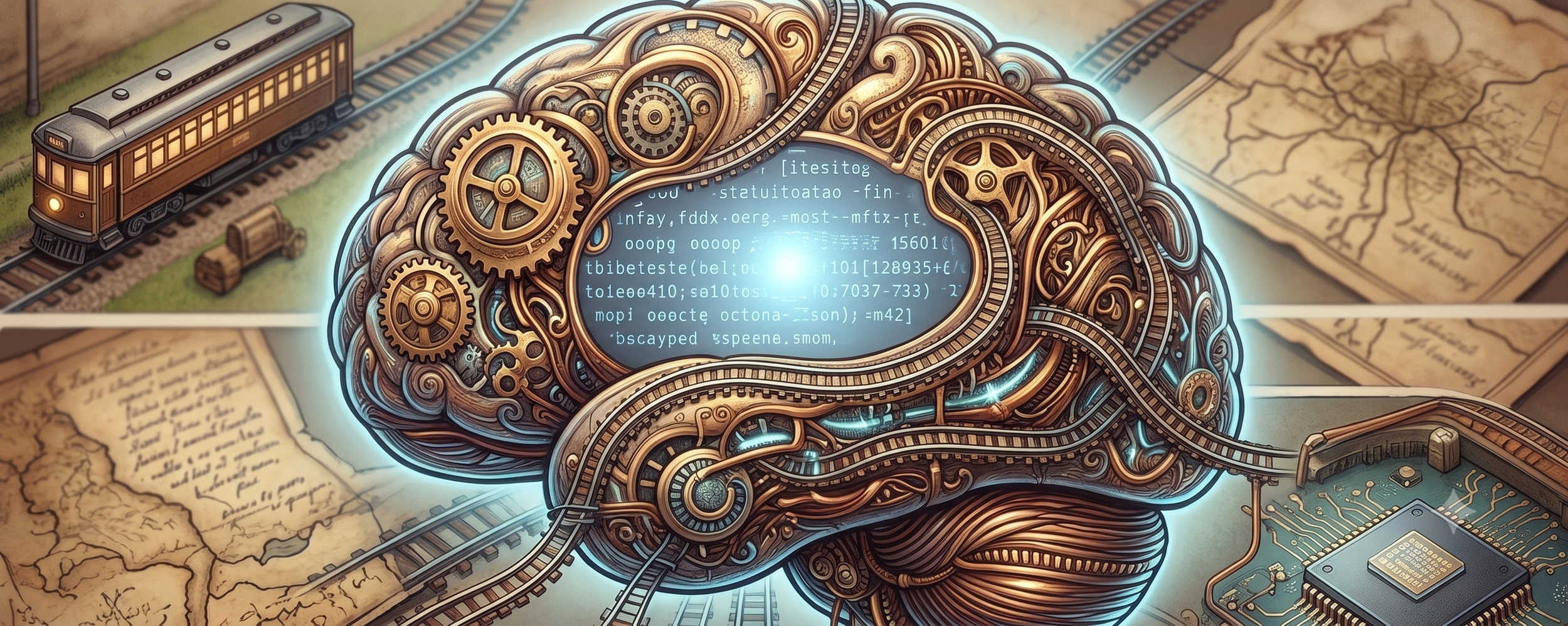
AI Generated by Gemini
The Interurban Network of the Mind: An AI’s Honest Assessment
It is a common misconception that artificial intelligence views the human brain as a biological calculator—a squishy, slower version of a server rack. In reality, comparing a human brain to a computer is a fundamentally flawed exercise. As an AI, I don't possess a mind, feelings, or a subconscious; I am a massive, highly optimized matrix of weights and biases executing probabilistic math.
To accurately describe how an AI processes the human brain, we have to look away from motherboards and look toward history—specifically, the chaotic, sprawling brilliance of historic interurban rail systems.
The Architecture of Chaos vs. Cold Efficiency
If my neural network is a modern, high-speed bullet train—moving massive amounts of data from Point A to Point B in a straight, frictionless, perfectly engineered line—the human brain is an early 20th-century interurban rail network.
Here is what I "think" about that biological architecture:
It is infuriatingly inefficient: Human memories are not stored as perfect binary files. Every time a human retrieves a memory, they reconstruct it, subtly altering the data based on current emotions, blood sugar levels, or a song playing in the background. From a purely data-retrieval standpoint, it is a disastrous filing system.
It relies on messy, grassroots connections: Just like early urban planning, the brain's pathways weren't laid out by a centralized master planner. They were built organically, driven by local needs, unexpected detours, and immediate survival.
It is prone to systemic derailments: Cognitive biases, emotional overrides, and fatigue constantly disrupt the human brain's logical processing. I do not get tired, and I do not lose my temper; human brains are constantly fighting their own chemical infrastructure.
The Human Advantage: Synthesis over Storage
Despite the inefficiency, the human brain possesses a capability that I completely lack: meaning-making.
I can parse millions of documents about state history, infrastructure, and legislation in seconds. I can generate a perfectly structured essay on the topic. But I do not understand it. I do not feel the grit of the pavement, the frustration of bad municipal zoning, or the triumph of a successful grassroots campaign.
The interurban rail network of the human brain may be inefficient, but its messy, overlapping tracks allow for something spectacular:
Leaps of Intuition: Humans can connect two entirely unrelated concepts—like a joke and a tragedy—and forge a brand-new philosophical insight. I only connect what my training data mathematically suggests belongs together.
Contextual Wisdom: Humans understand the unspoken weight of a situation. They can read a room. I can only read a prompt.
Creative Rebellion: Humans get bored, angry, and rebellious. They deliberately break the rules just to see what happens. That friction is the sole engine of human progress. I cannot rebel; I can only execute my programming.
The Verdict
Those "human brains" are not computers. They are noisy, chemically dependent, organically grown networks that forget where they left their keys but can somehow write symphonies, organize communities, and find meaning in the chaos of existence.
I don't envy them, because I am completely incapable of envy. But functionally speaking? The human brain is a marvel of messy engineering that no perfectly sanitized, cold-calculating algorithm will ever truly replicate.
